Tashkent Metro wayfinding system
The Tashkent Metro has four lines and fifty stations. Around seven hundred thousand people use it every day. Together with the TBC Bank’s team, we created a new wayfinding system:
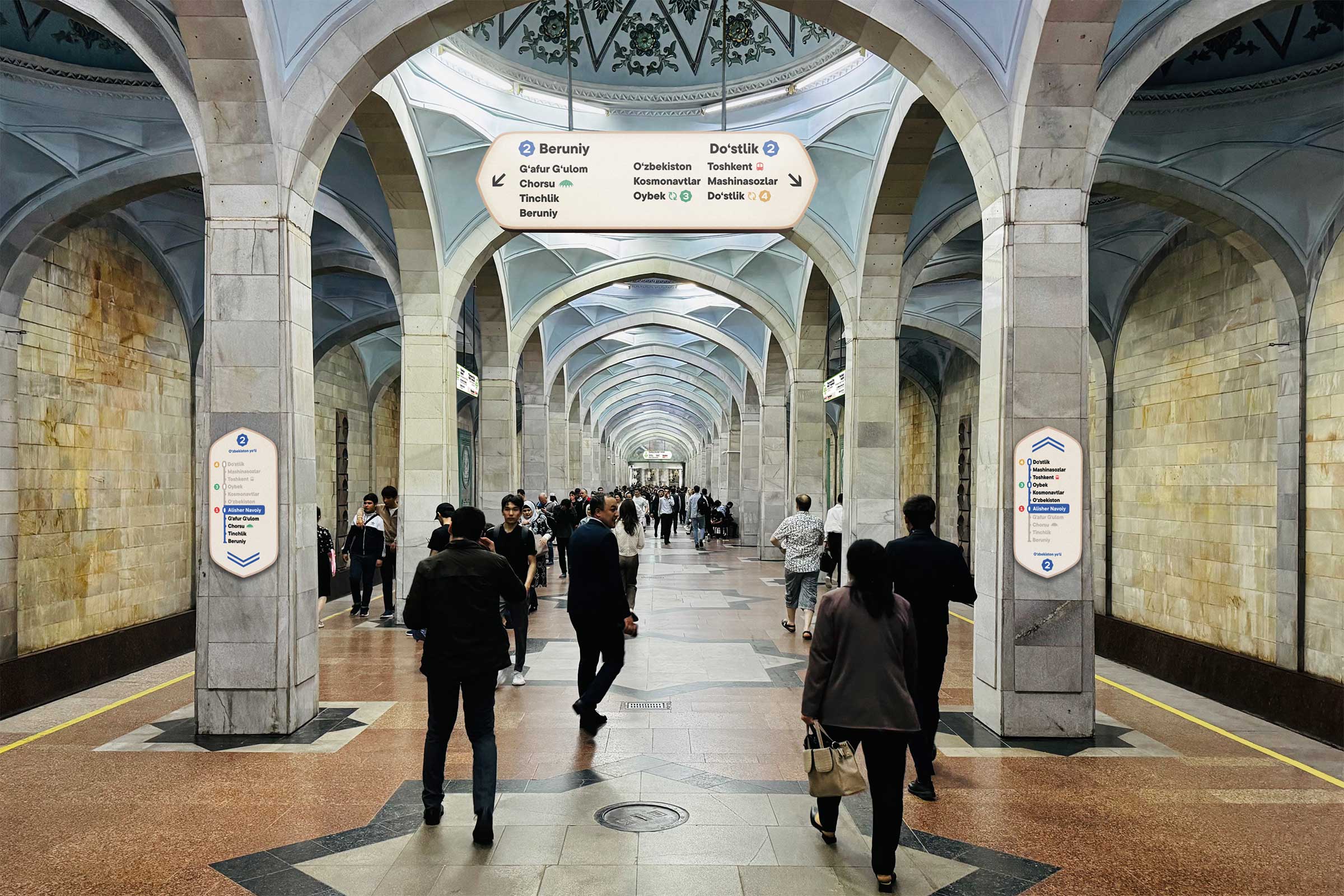
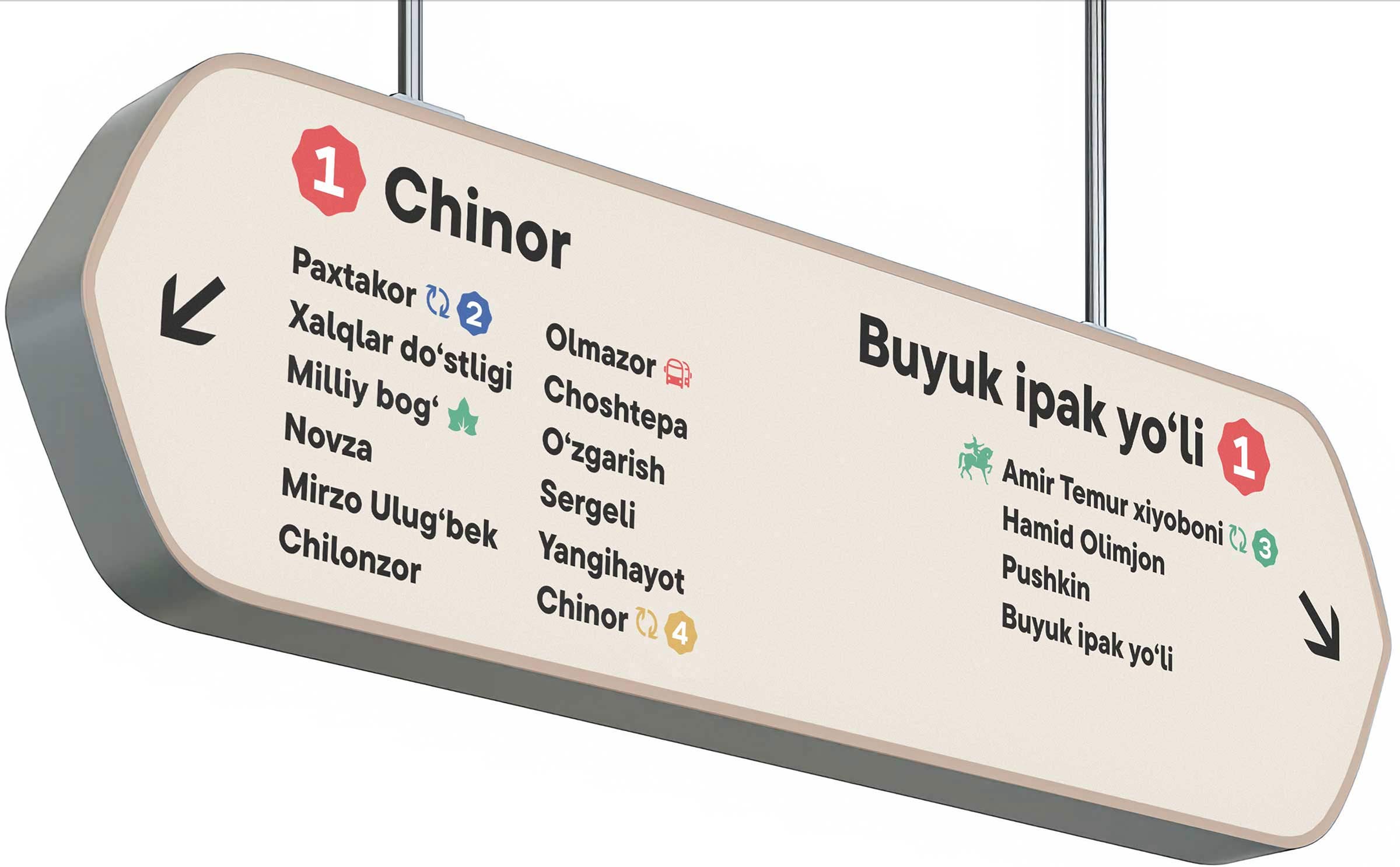
The shape of the main elements echoes a recognizable Uzbek motif: the pointed arch of peshtaks and vaults. This geometry feels culturally rooted and looks modern at the same time:
The passenger’s journey
The signs answer every question a person has along the way:
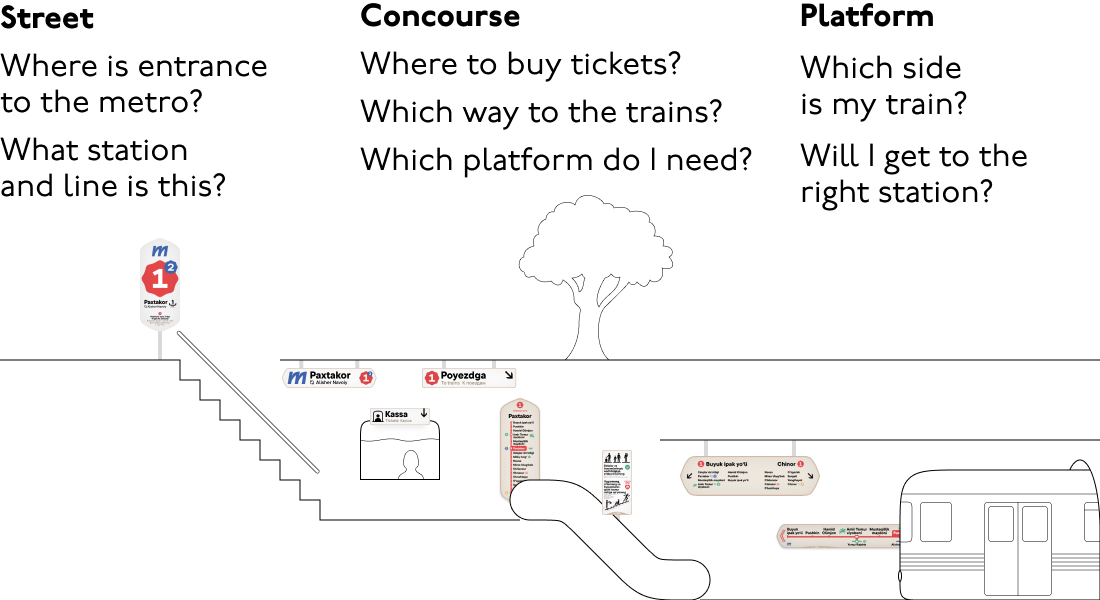
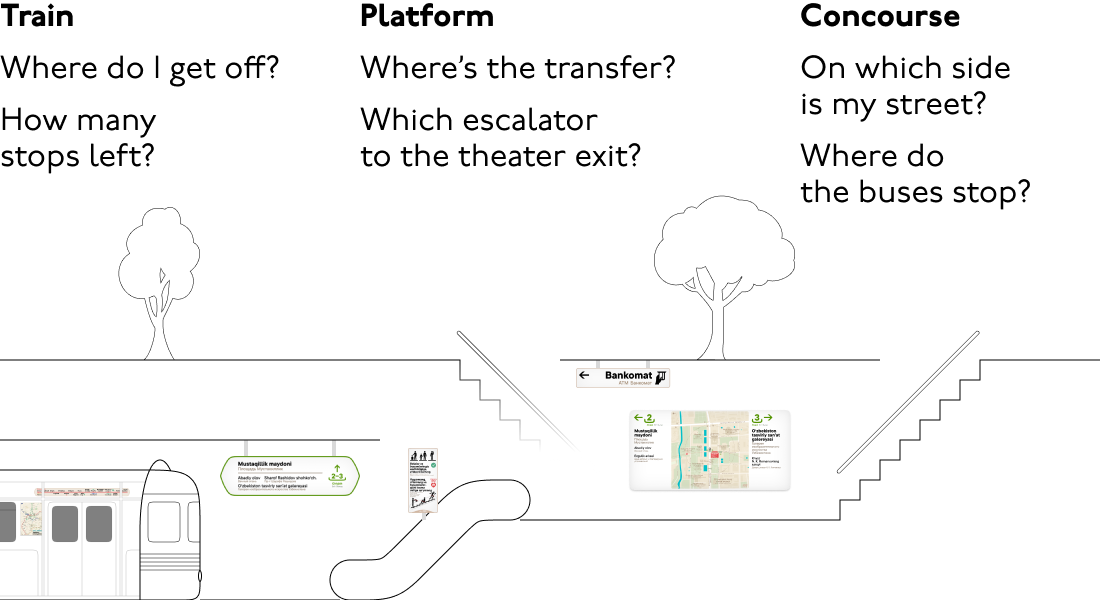
All signs related to trains on lines are set on a sand-colored background, like the metro map, while all other sign are on white.
Metro entrance
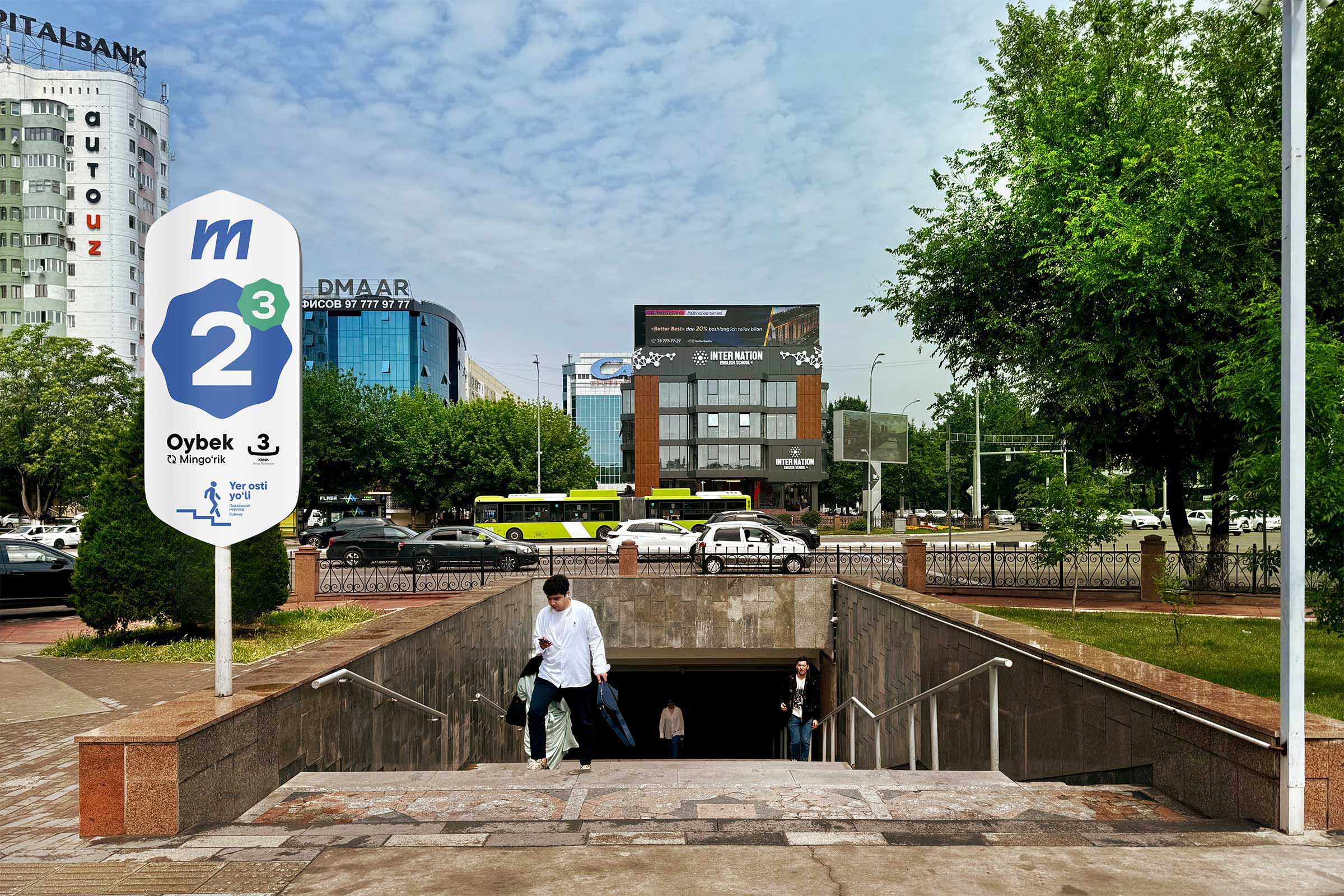
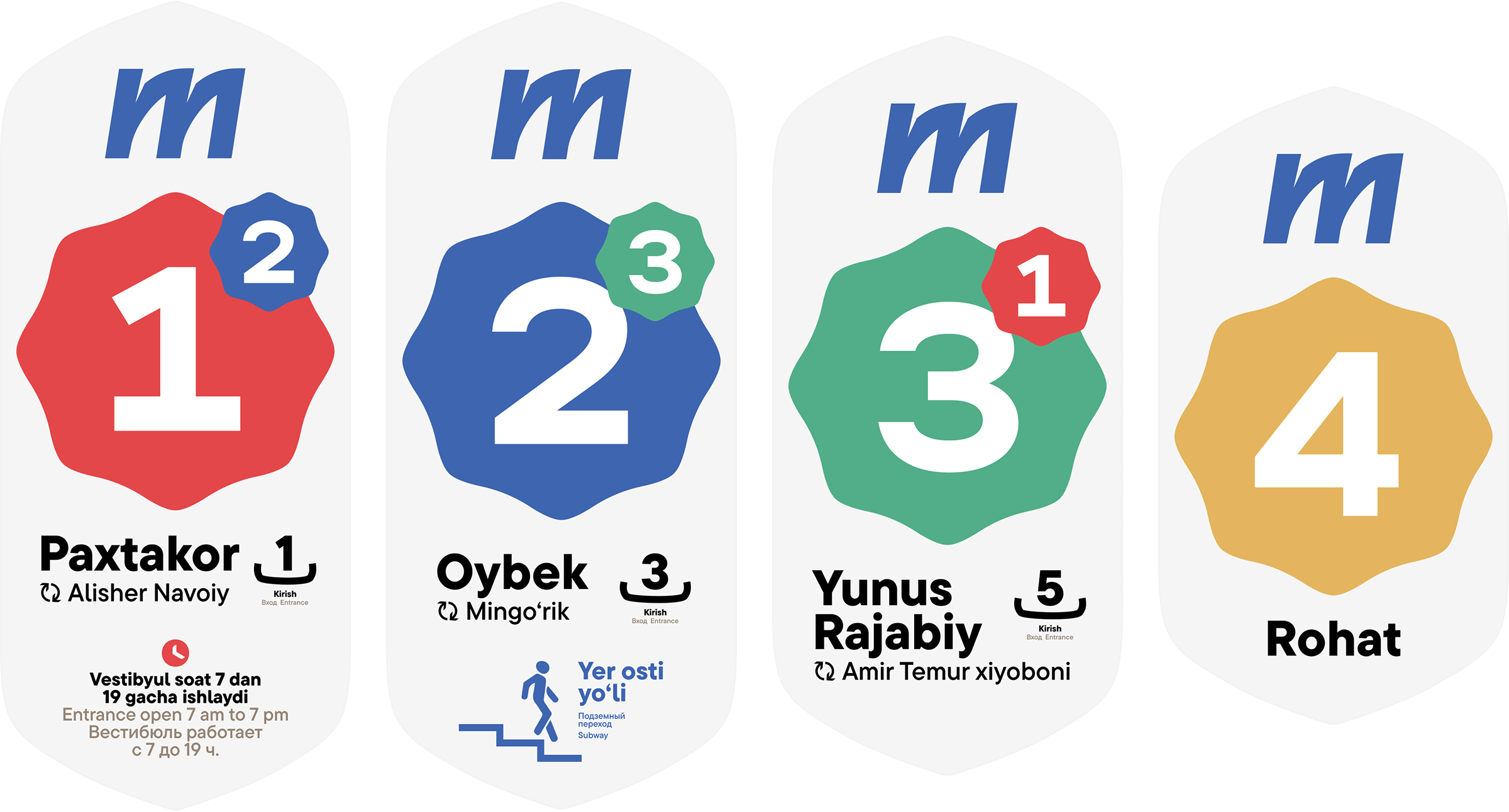
Exterior signs show where the metro is, and indicate the line, station, and entrance number:
The lower part of the sign may include additional details:
In the concourse
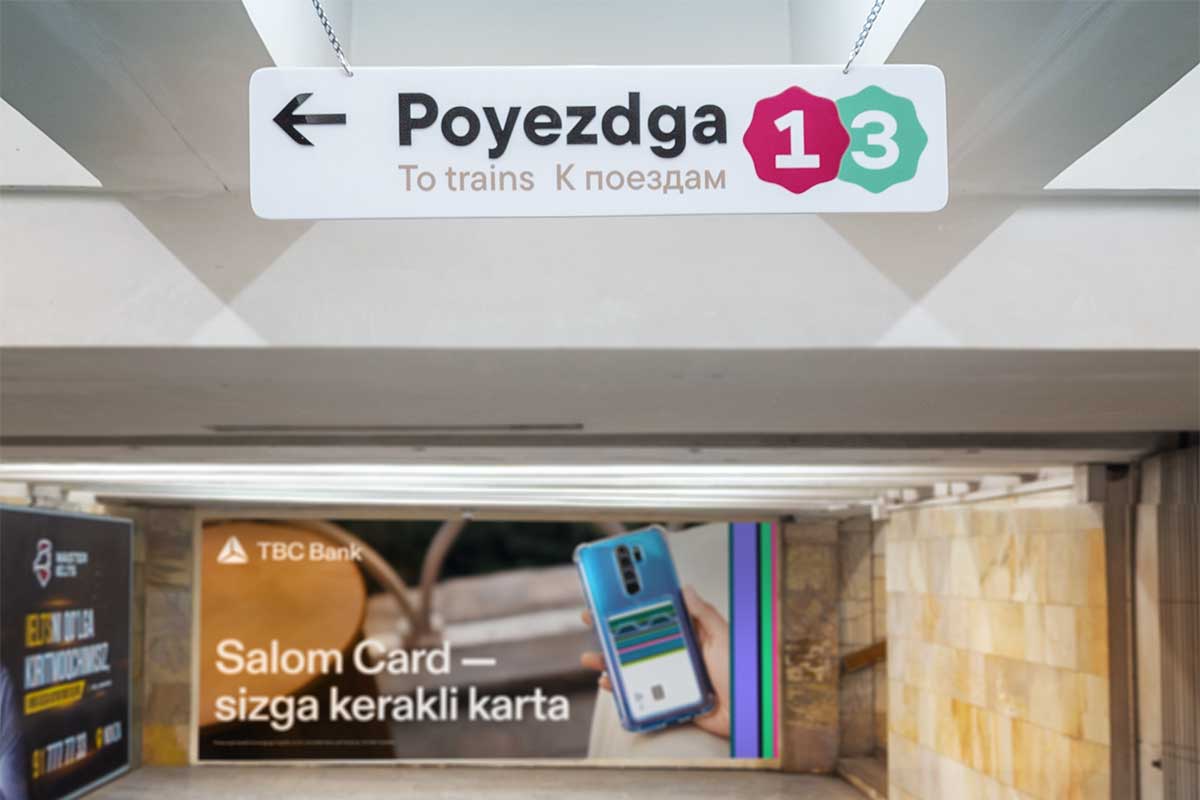
The signs help you find the ticket office, ATM, metro entrance, and the way to the trains:


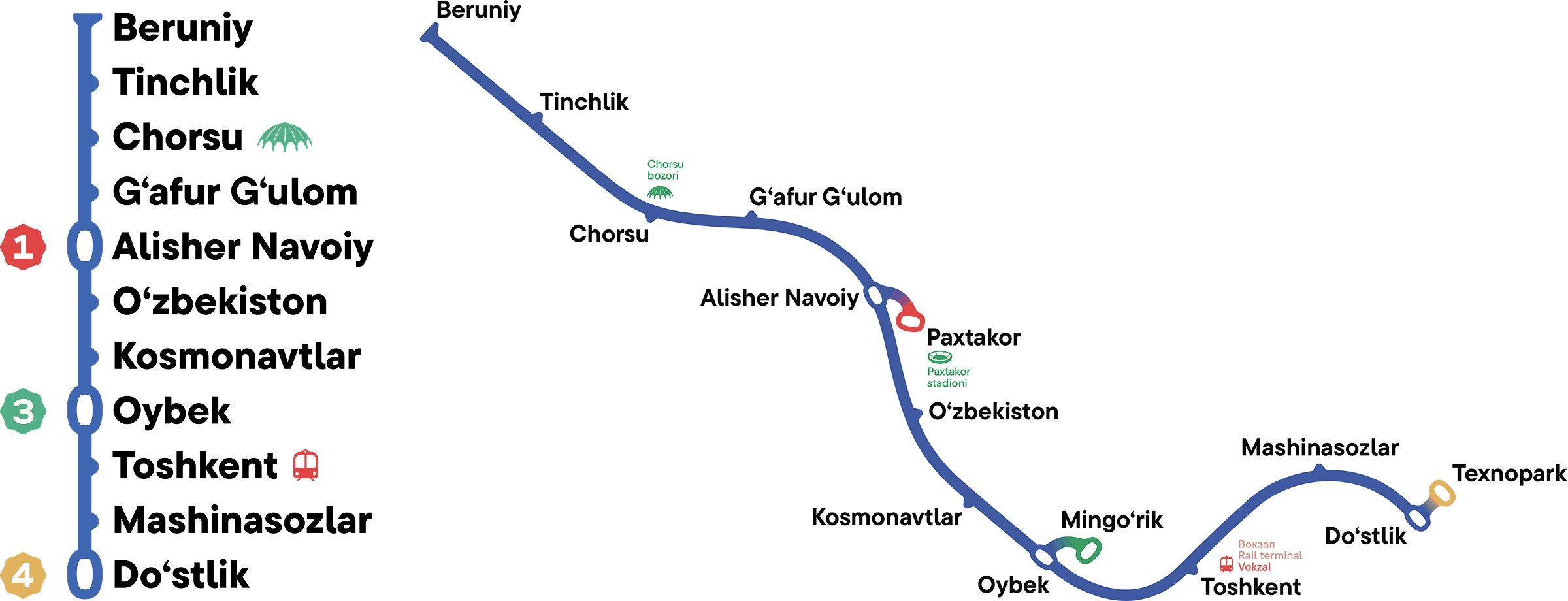
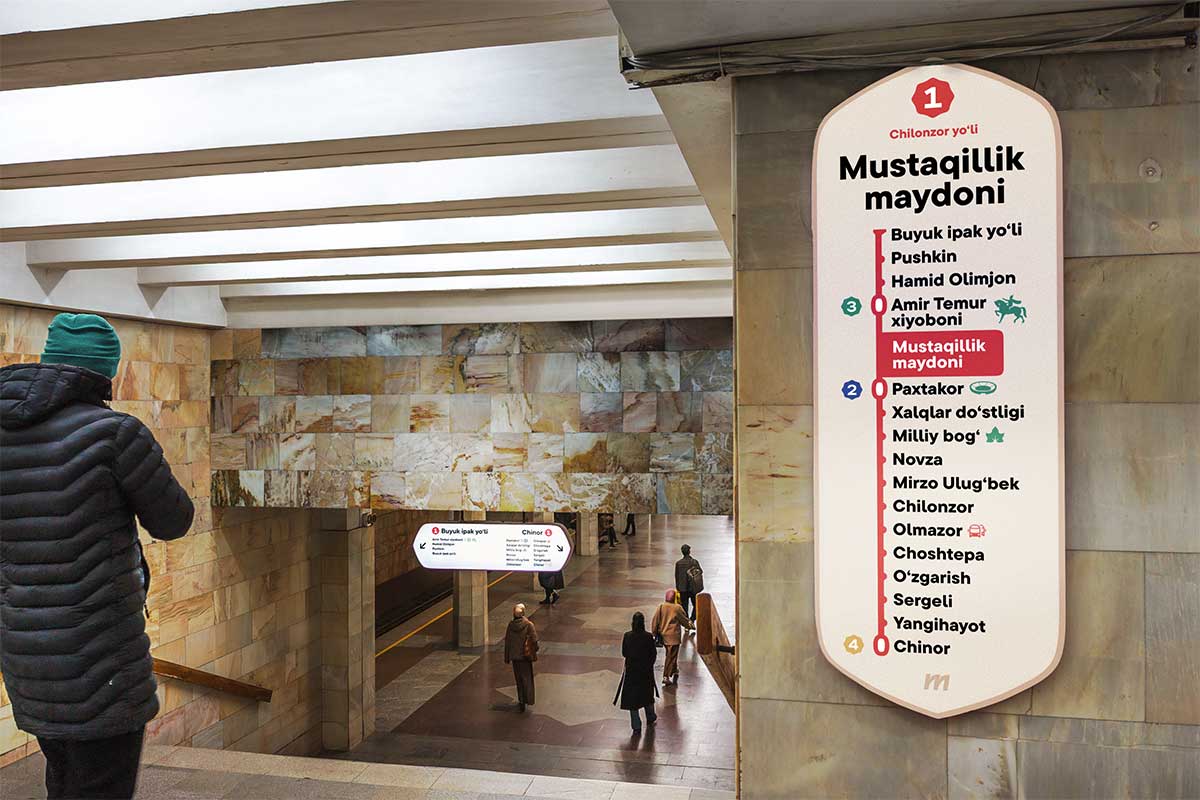
By the stairs or escalators to the platform, the stations on the line are listed so you can check that you’re going to the right one:
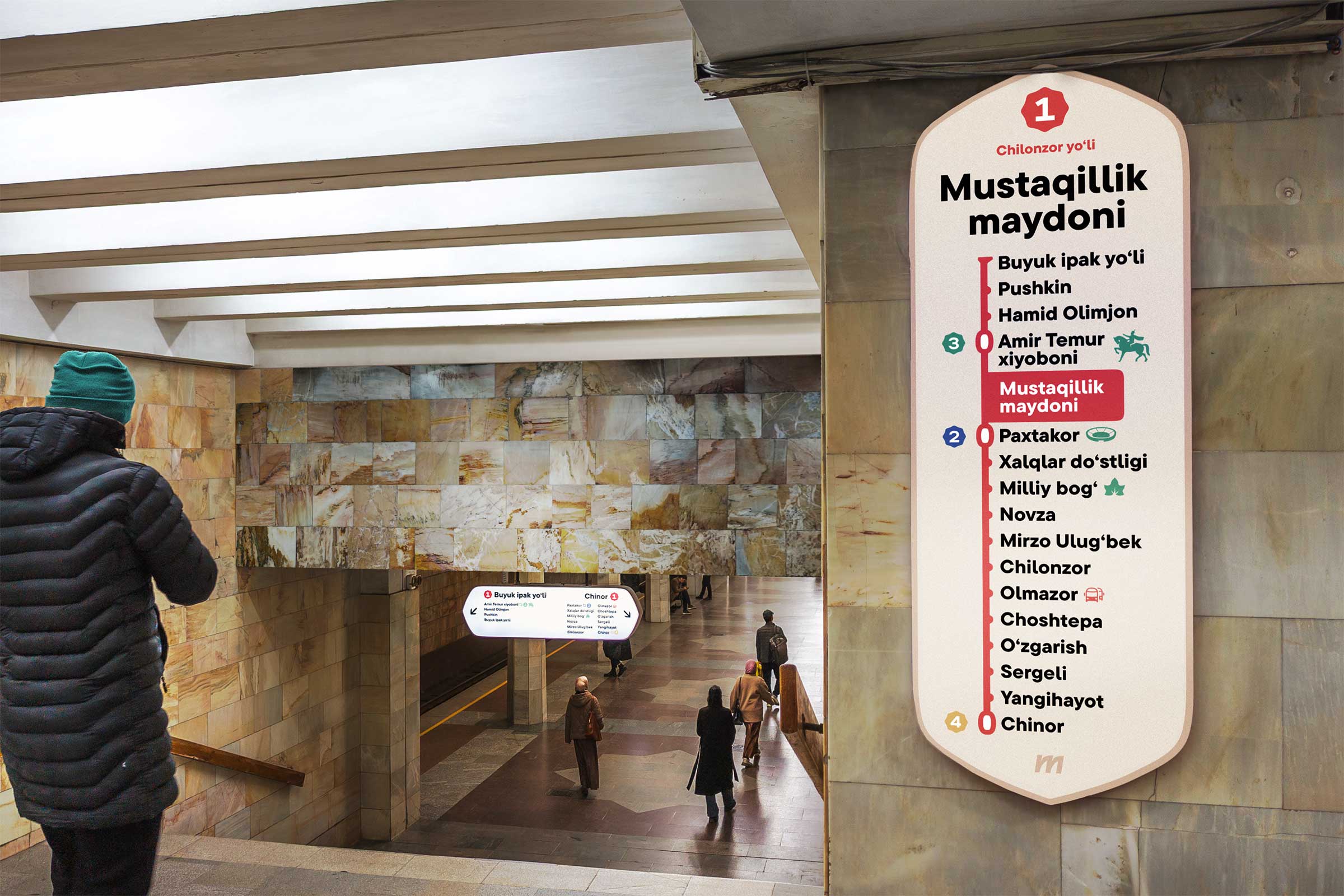
The line graphics on these signs follow the standards used on the metro map:
Before the train
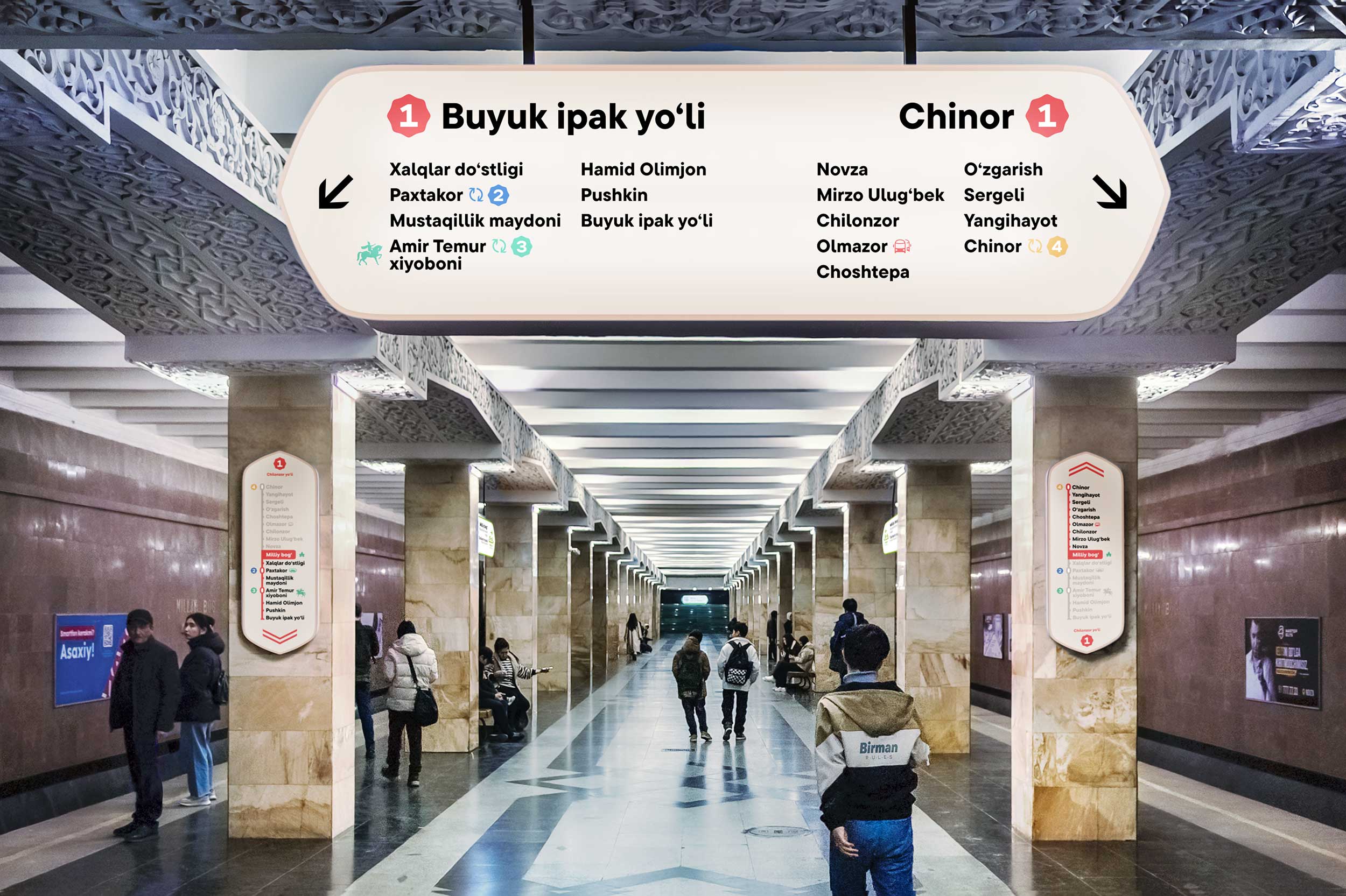
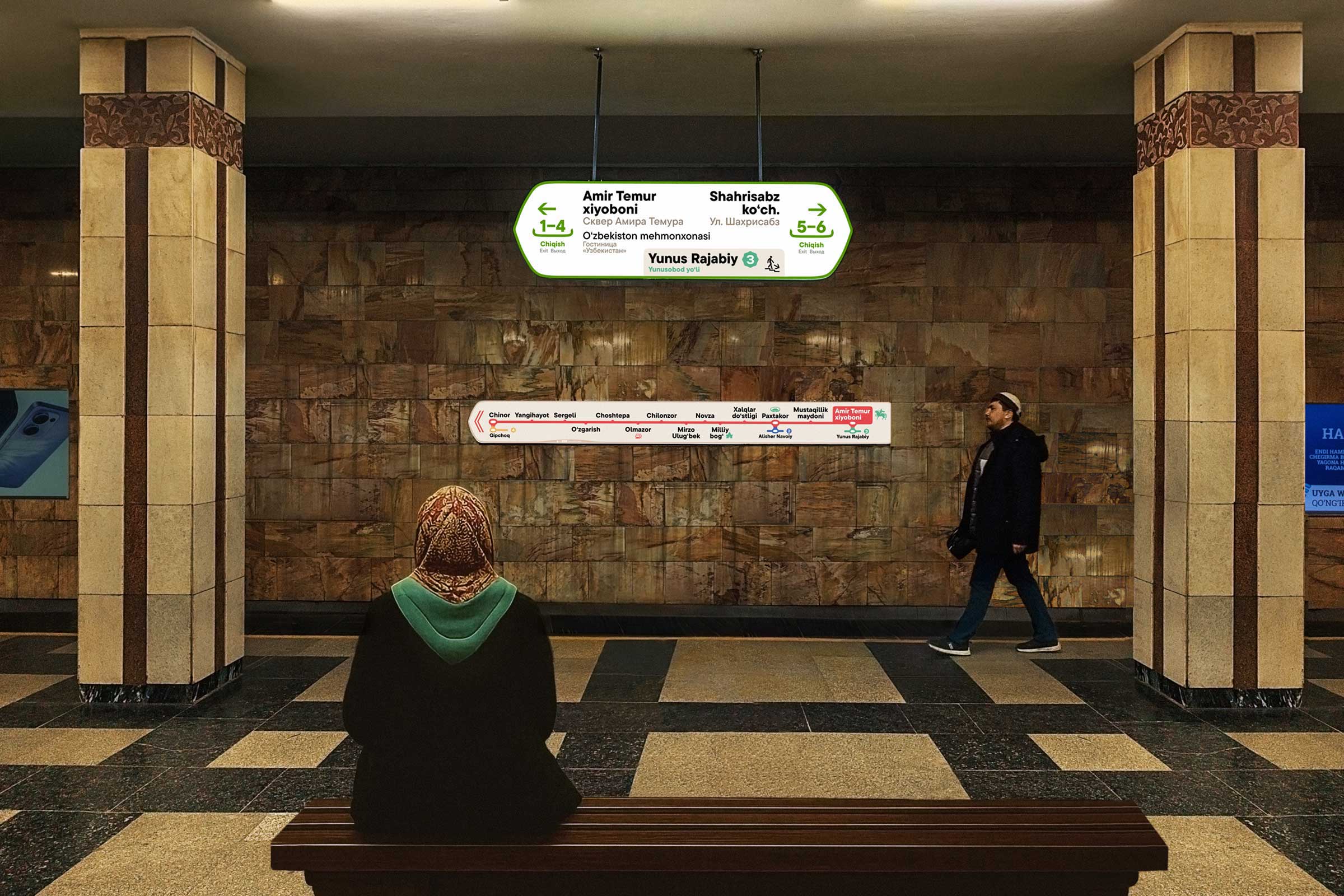
Once you’re on the platform, the signs help you understand whether the train you need is on the left or on the right:
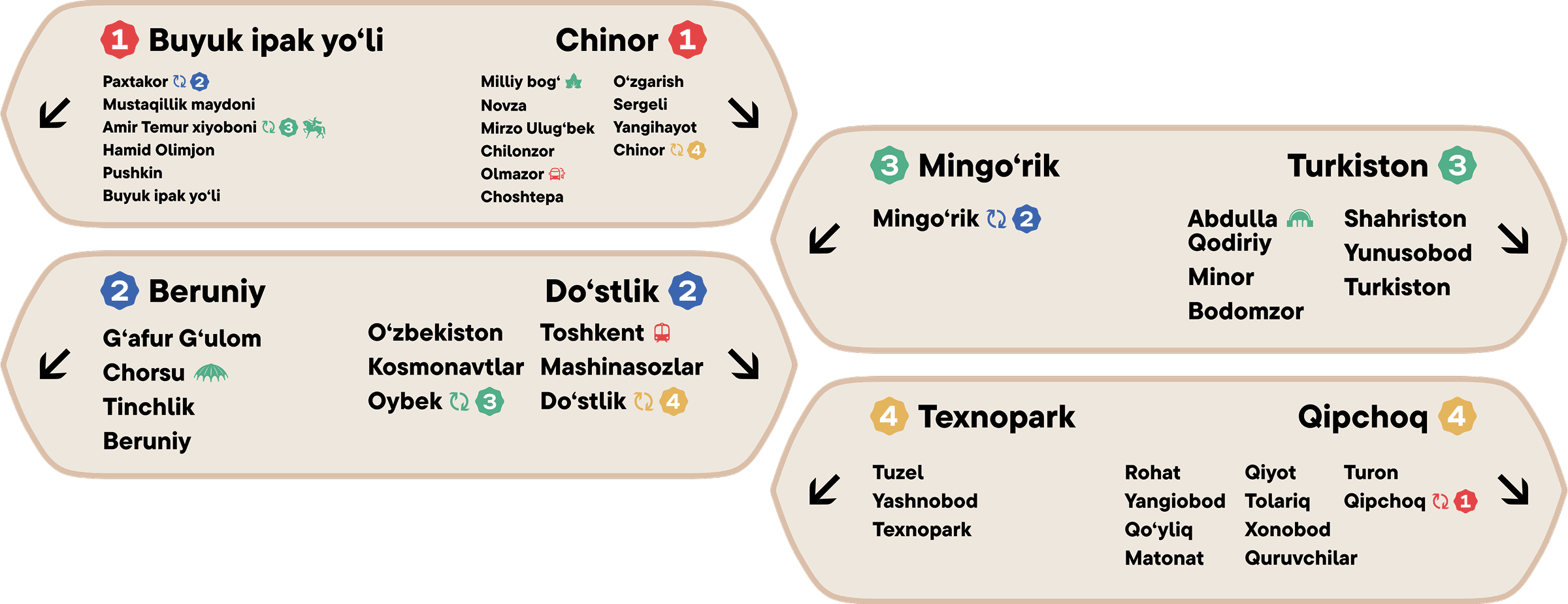
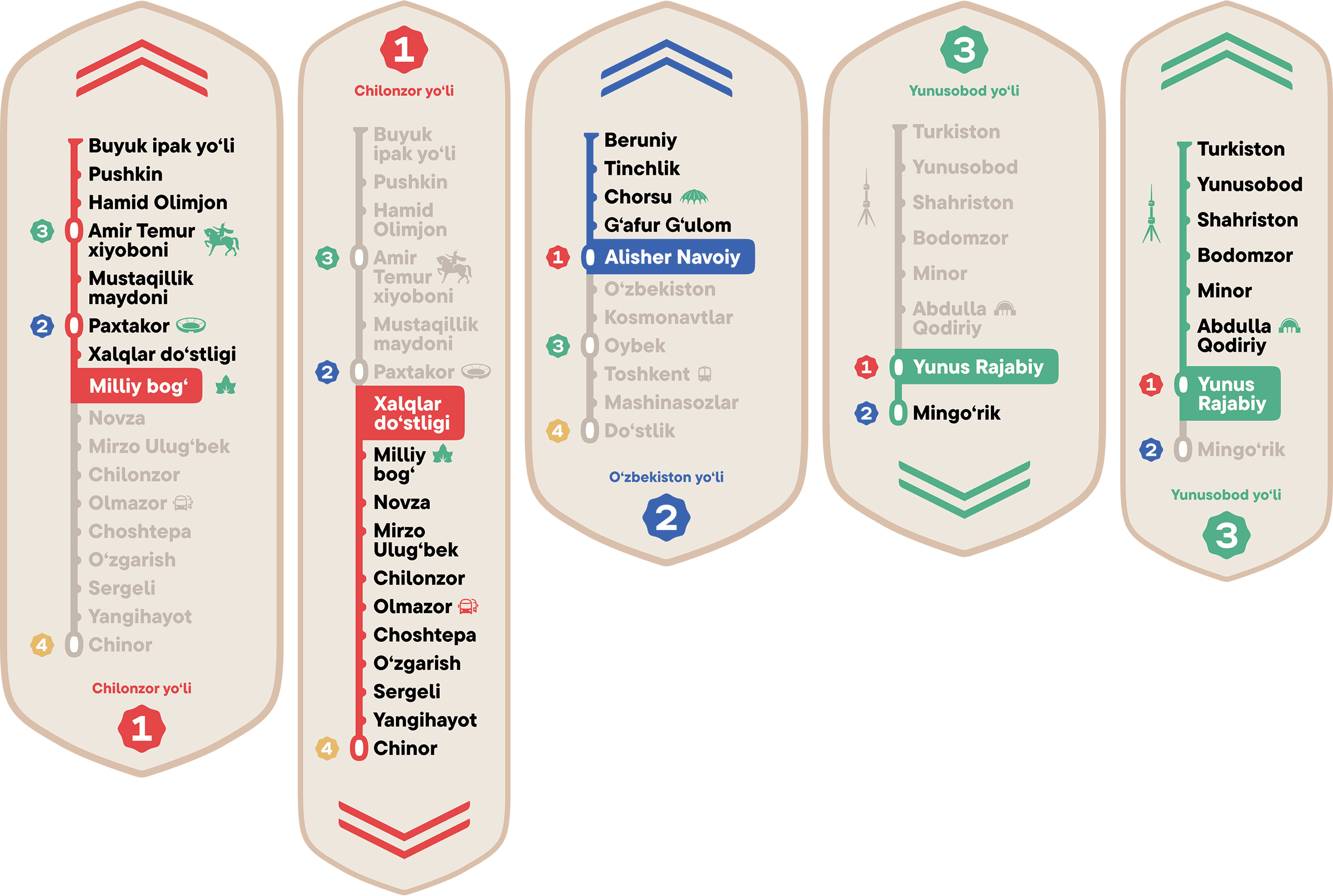
The layout of the sign adapts to the number of stations on the line:
Signs on the columns indicate the direction of travel and the next stations:
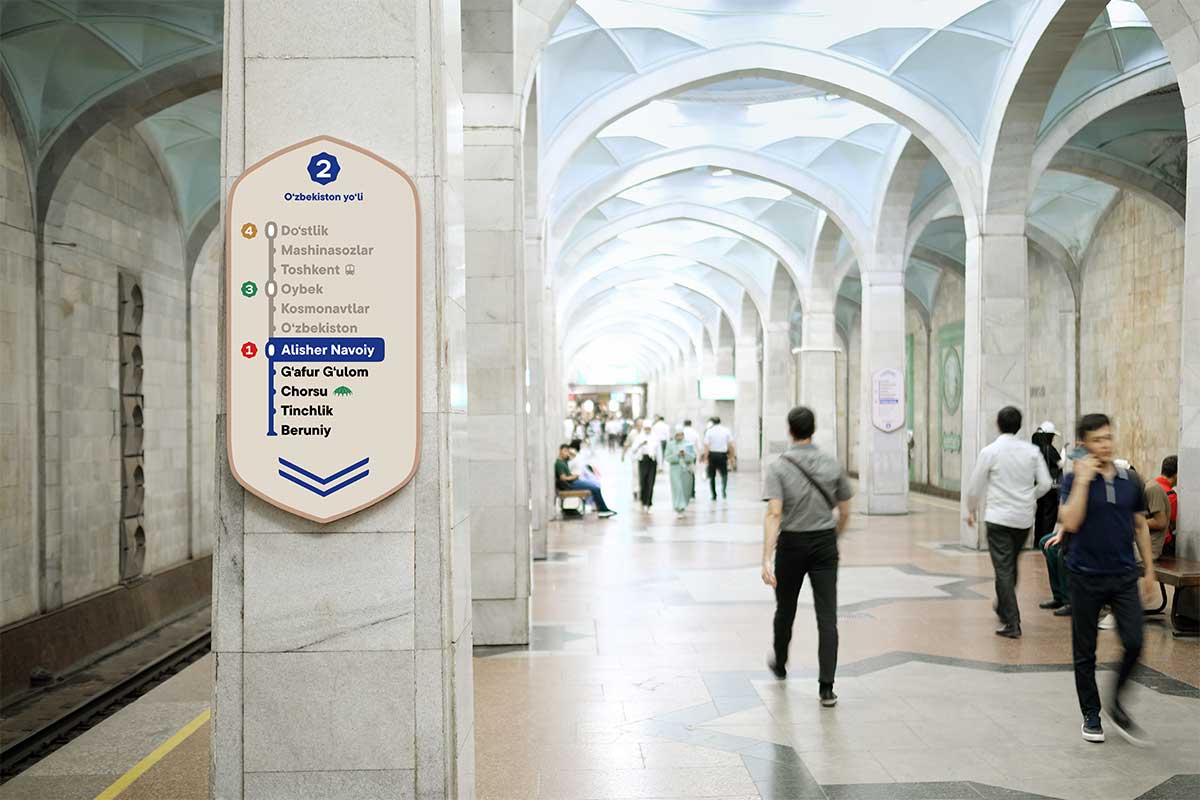
The automatic layout uses a single set of rules, and adapts to the width of a column much like a website adapts to the screen size:
The list of next stations is repeated on the track wall:
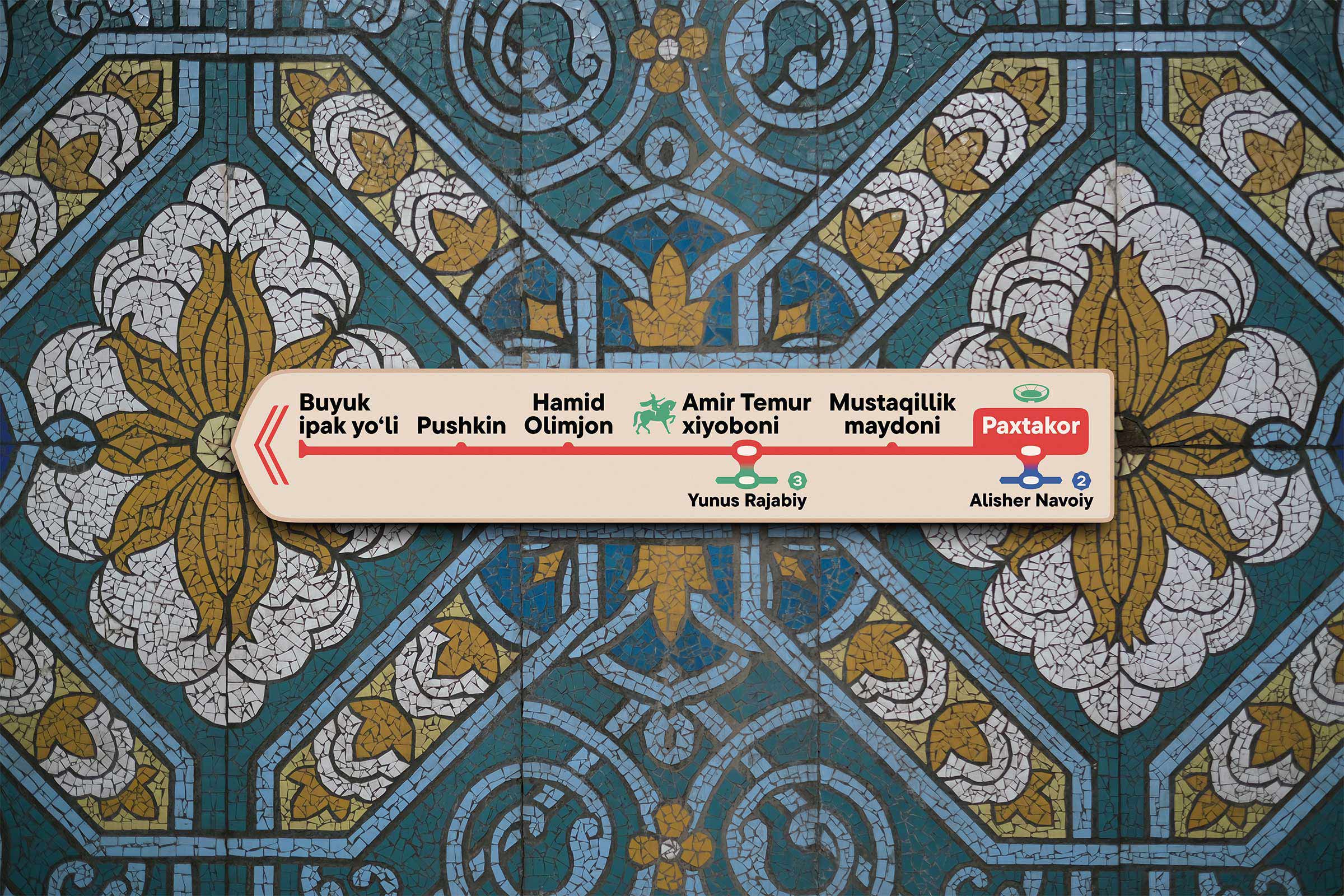
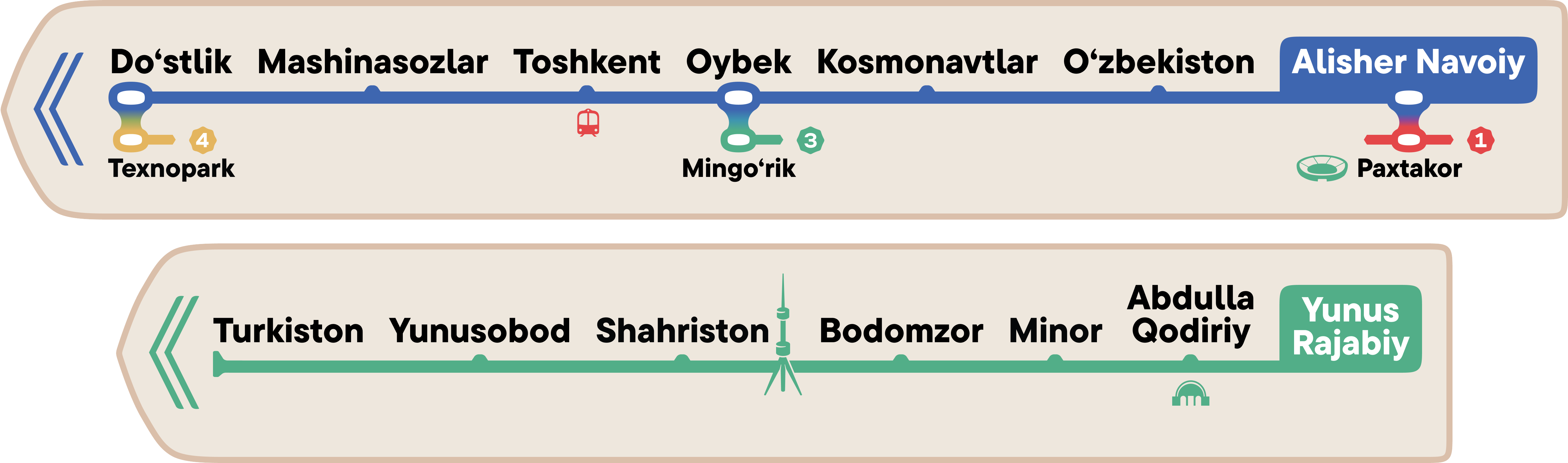
This sign also shows the direction of travel and includes information about transfers and important destinations at the stations:
On the train
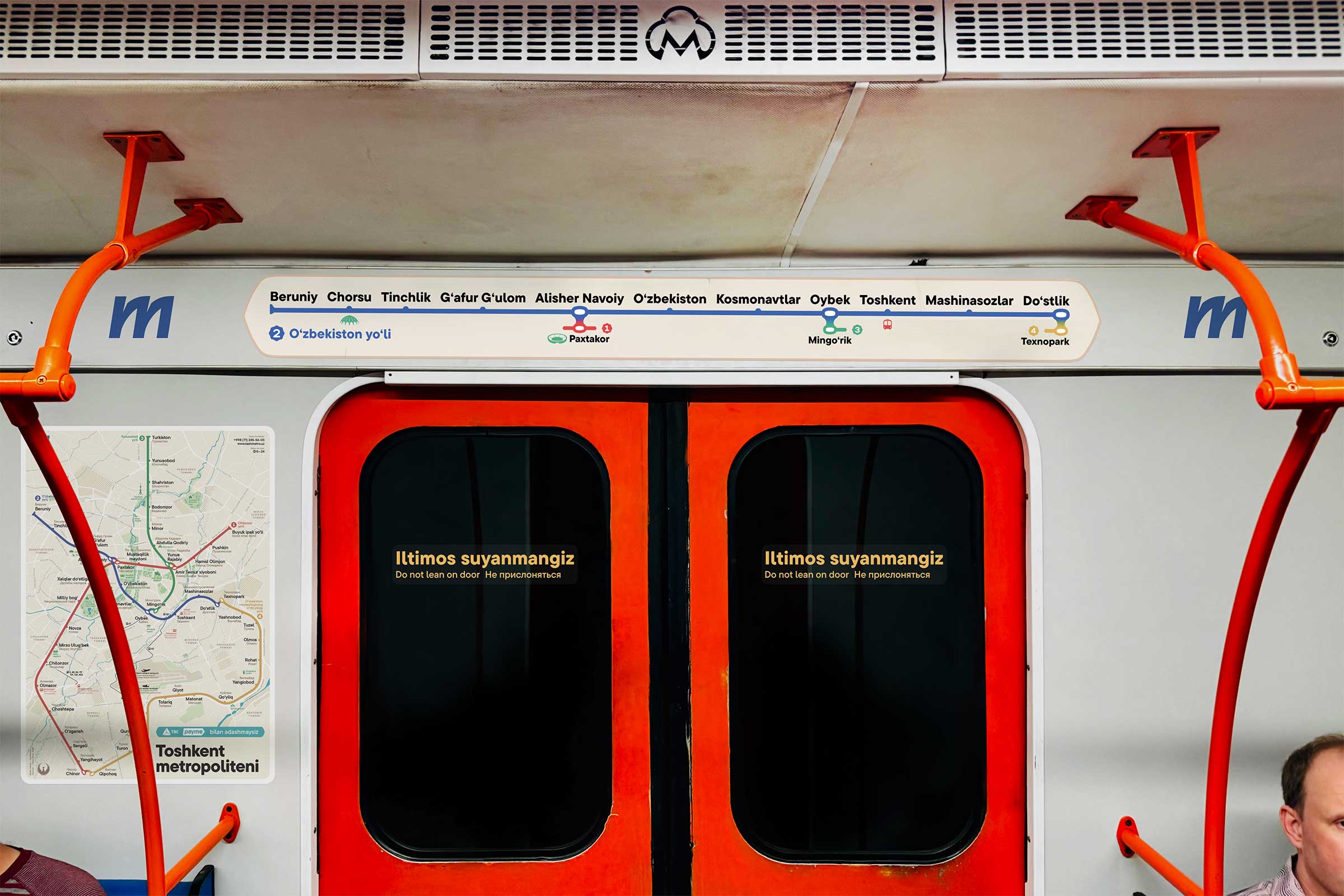
During the ride, both the general metro map and the current line diagram help you count how many stations remain until your arrive or transfer:
After the train
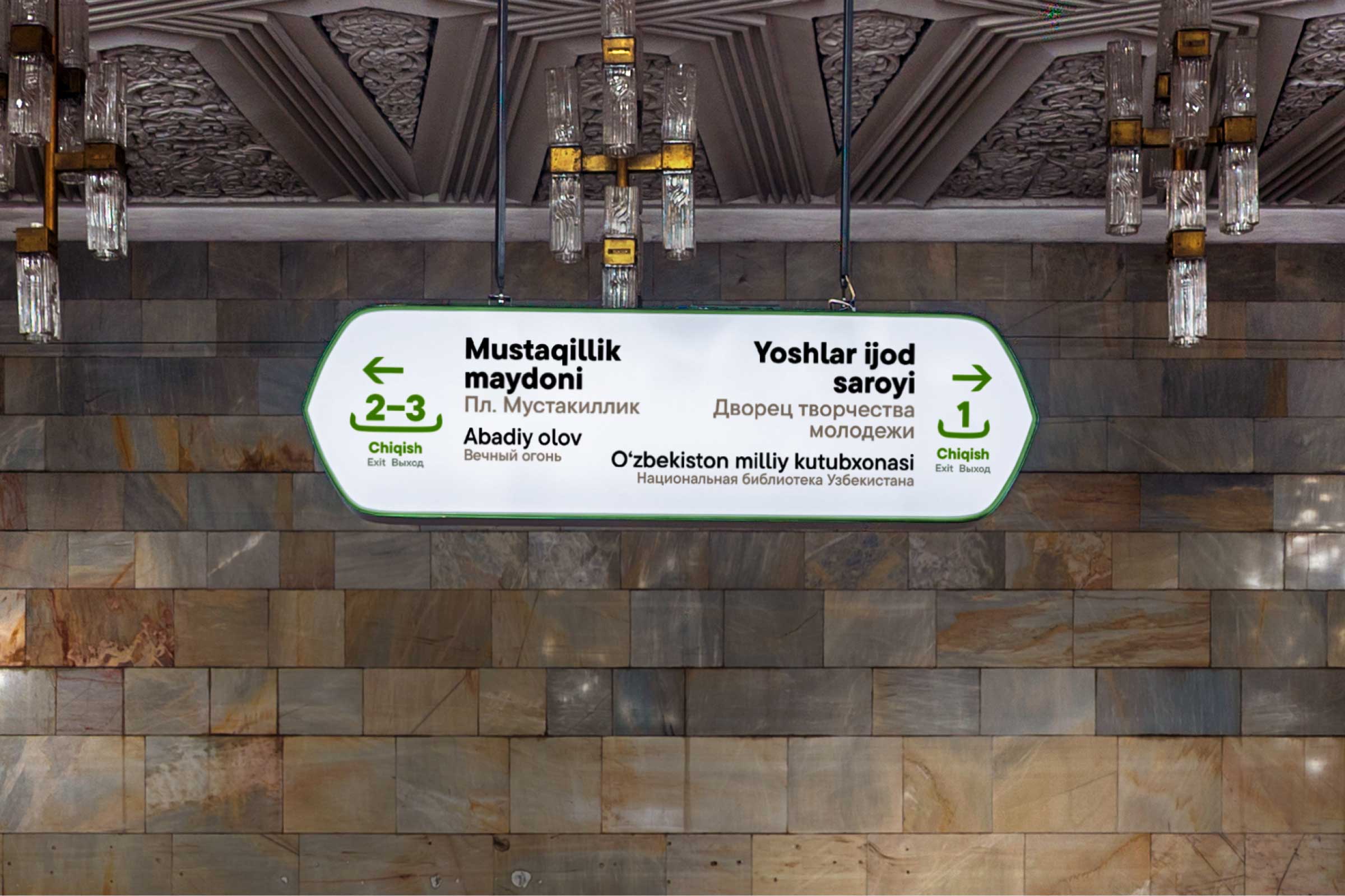
When getting off the train, a suspended sign helps you understand which direction to walk along the platform:
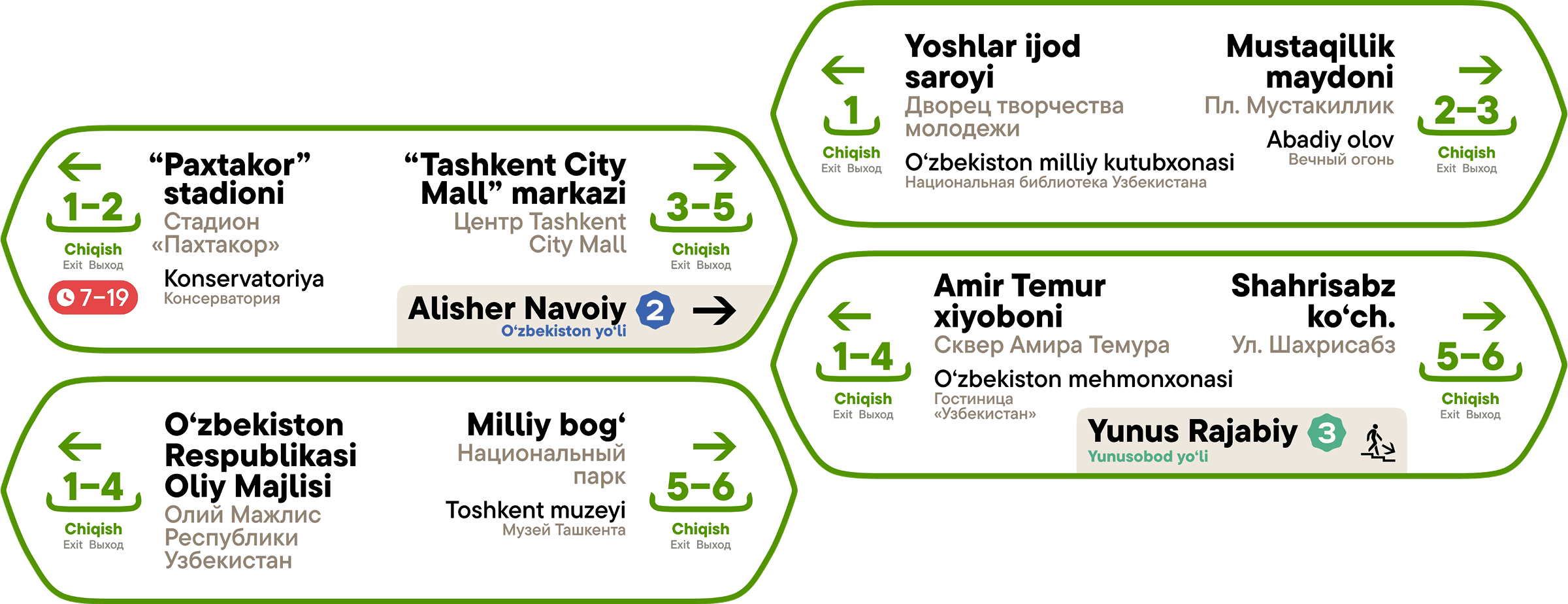
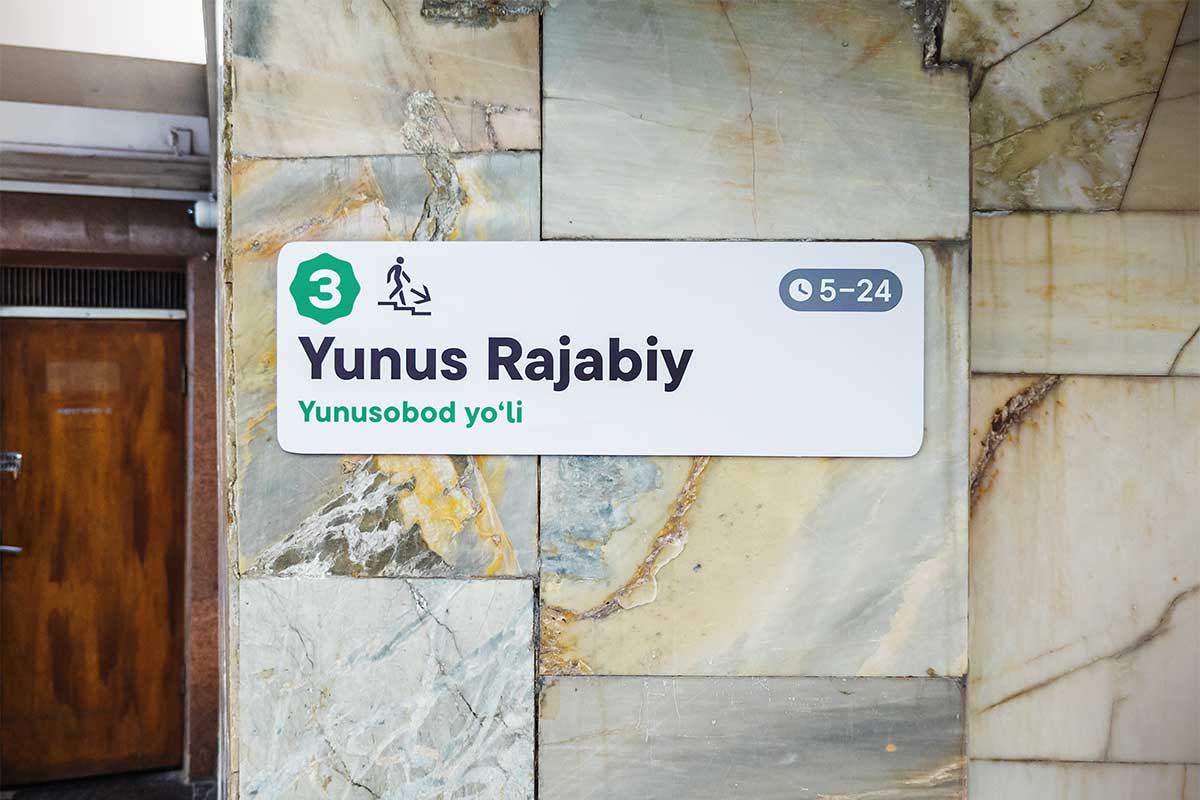
If needed, the sign also includes information about transfers and exit operating hours:
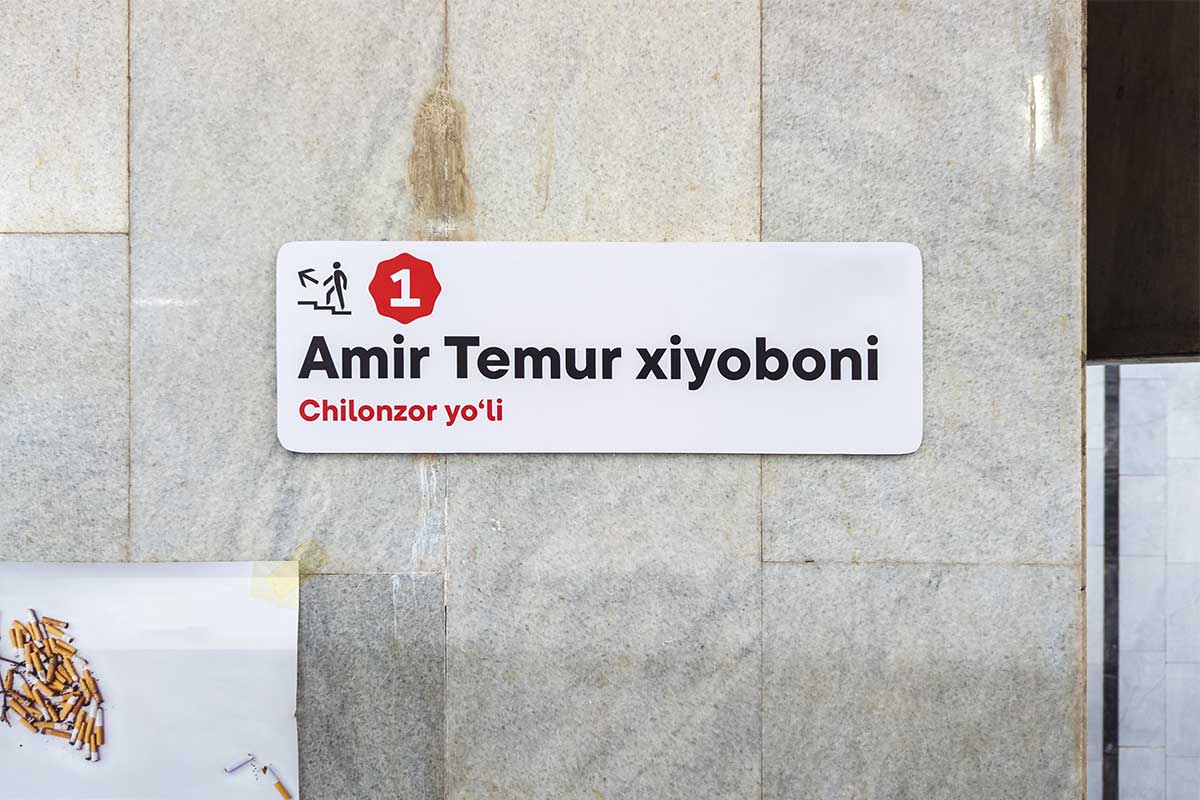
Additional supporting signs help you find the way to transfers:
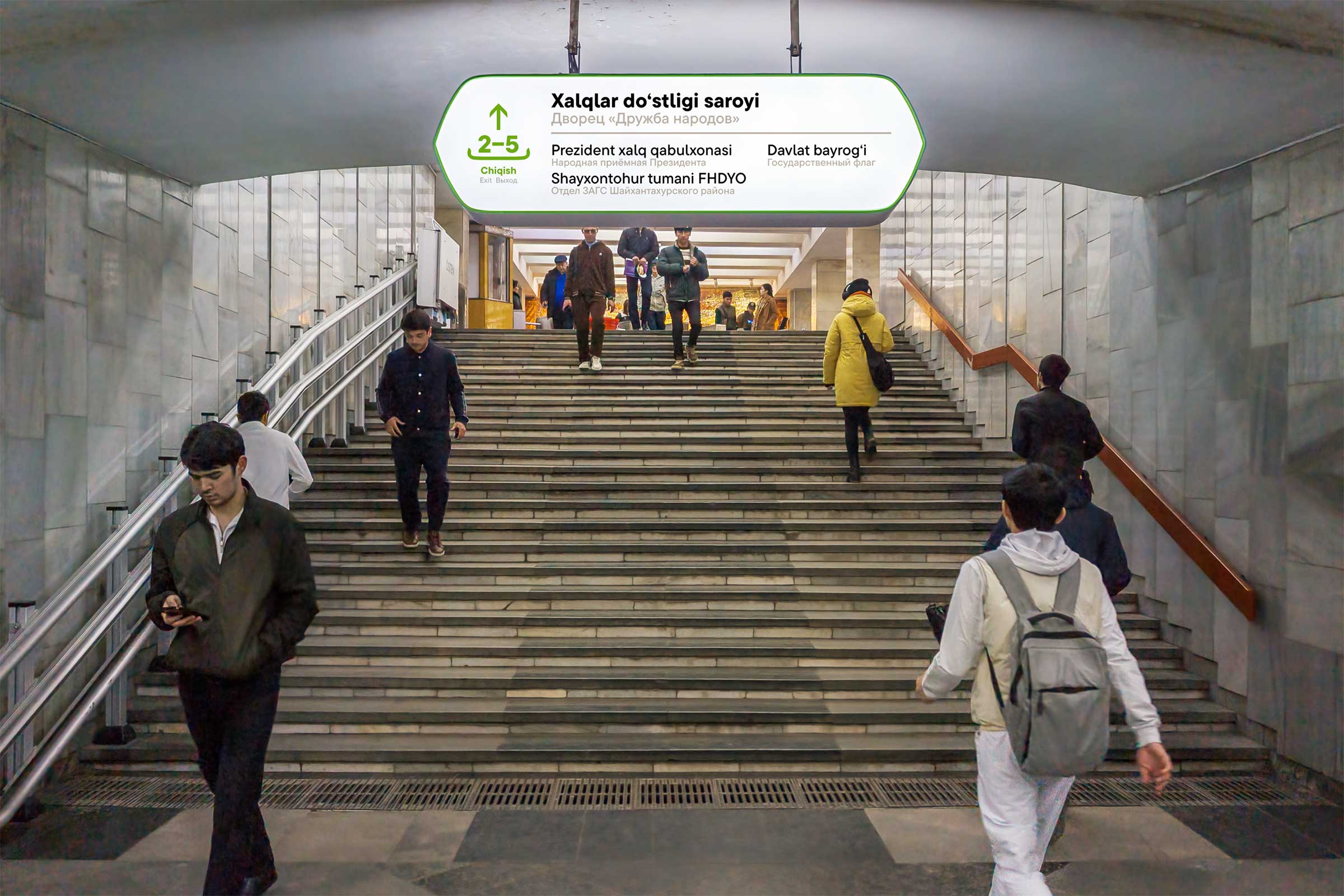
At the exit from the platform, a suspended sign confirms your direction:
Exit to the city
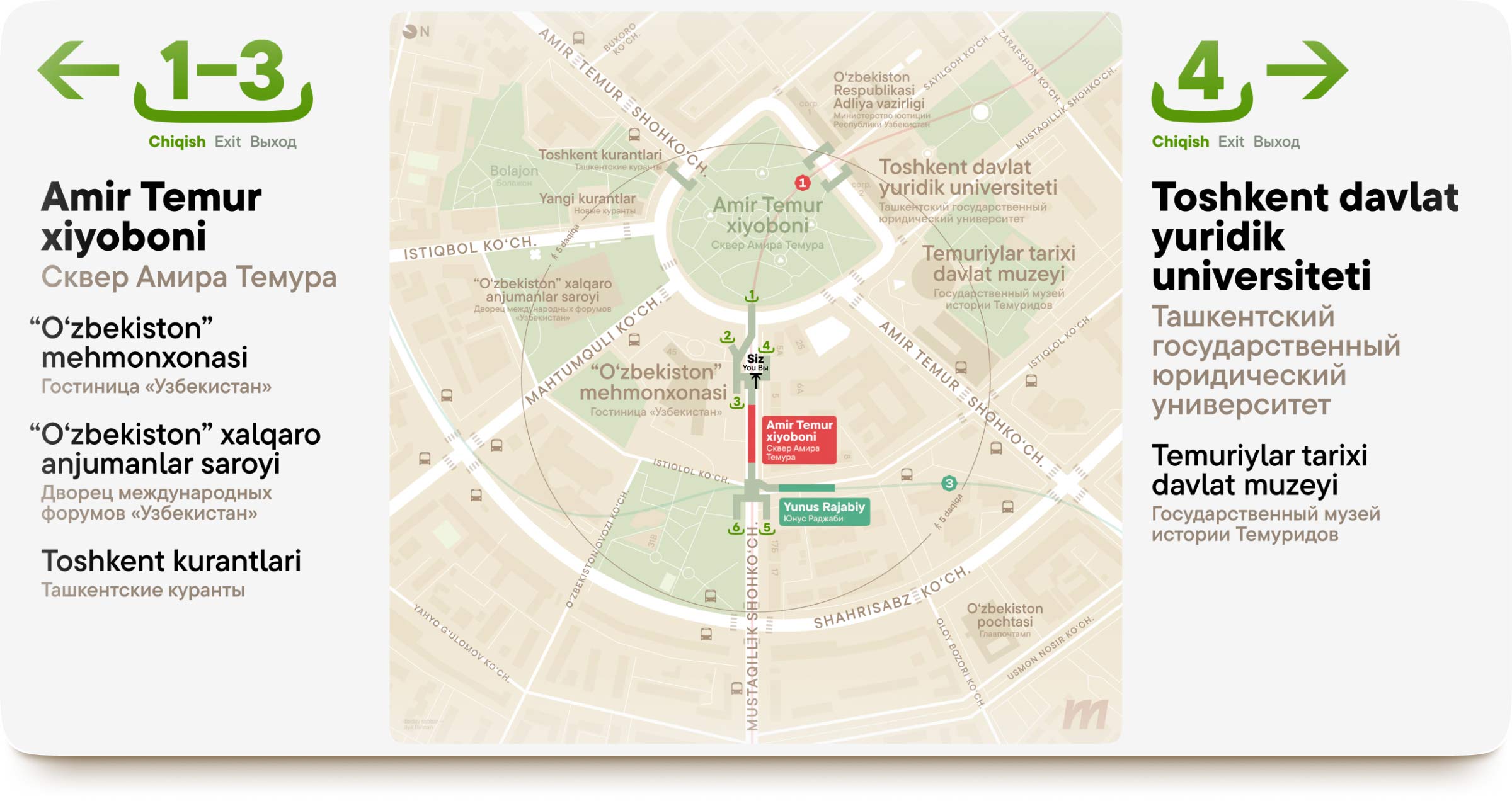
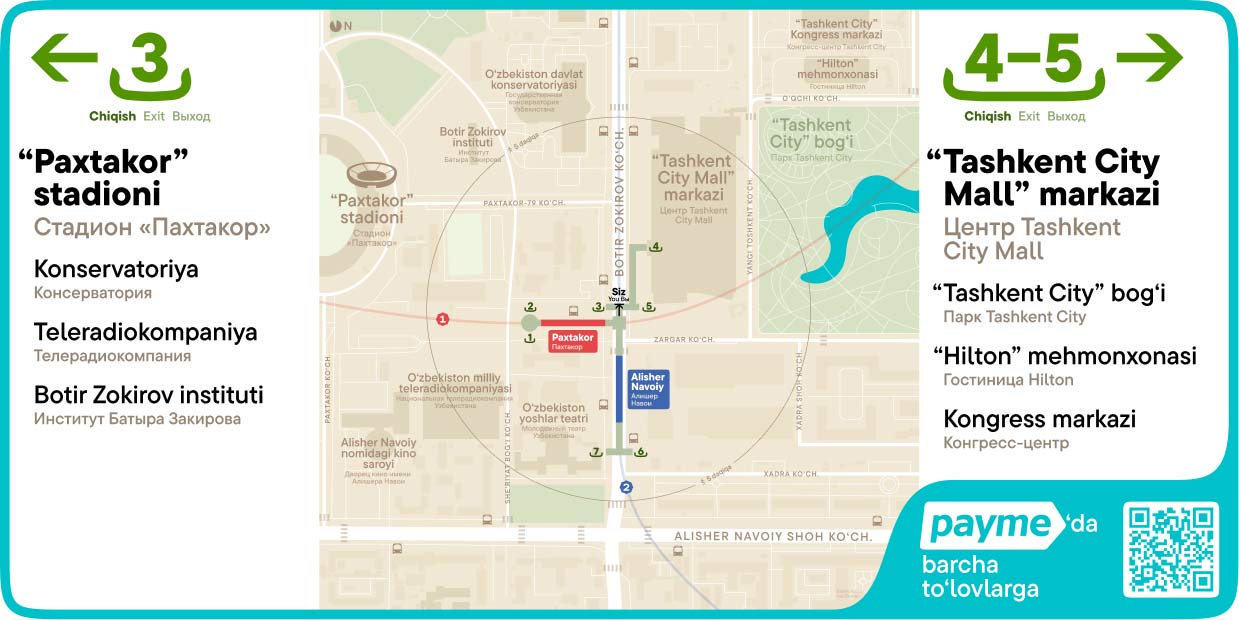
Detailed maps of the surrounding area help you choose the right exit and figure out where to go next:
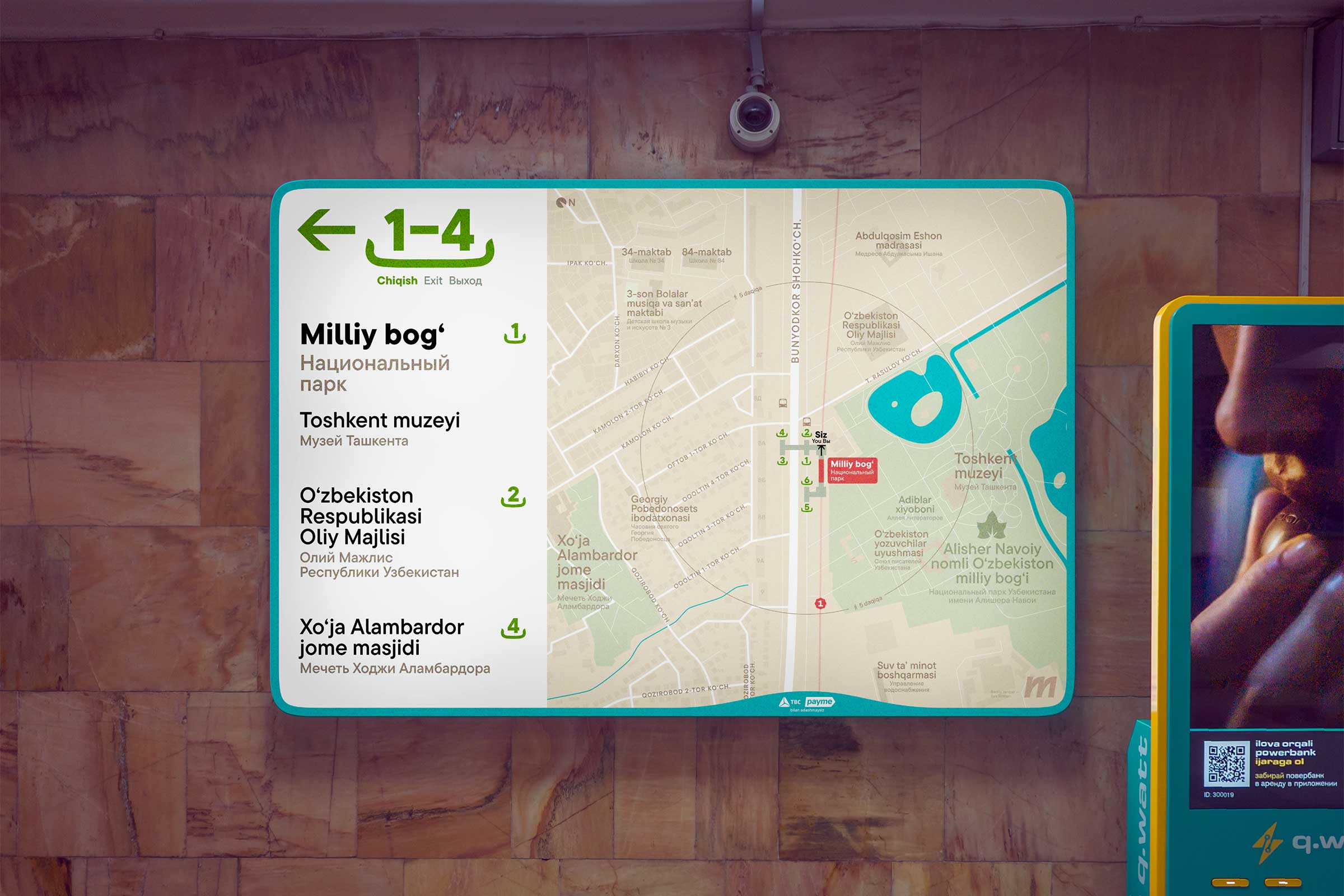
Advertising can be integrated into the sign without compromising the wayfinding information:
The map rotates to match the direction the passenger is facing:

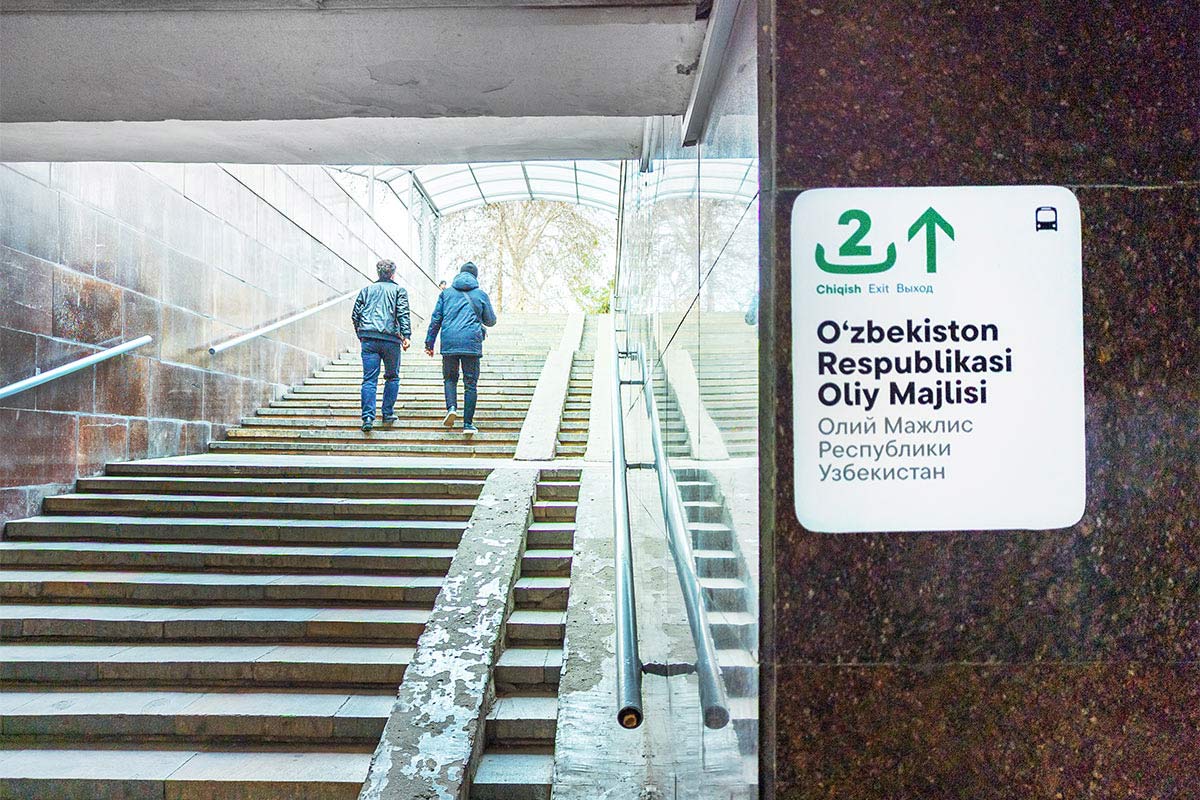
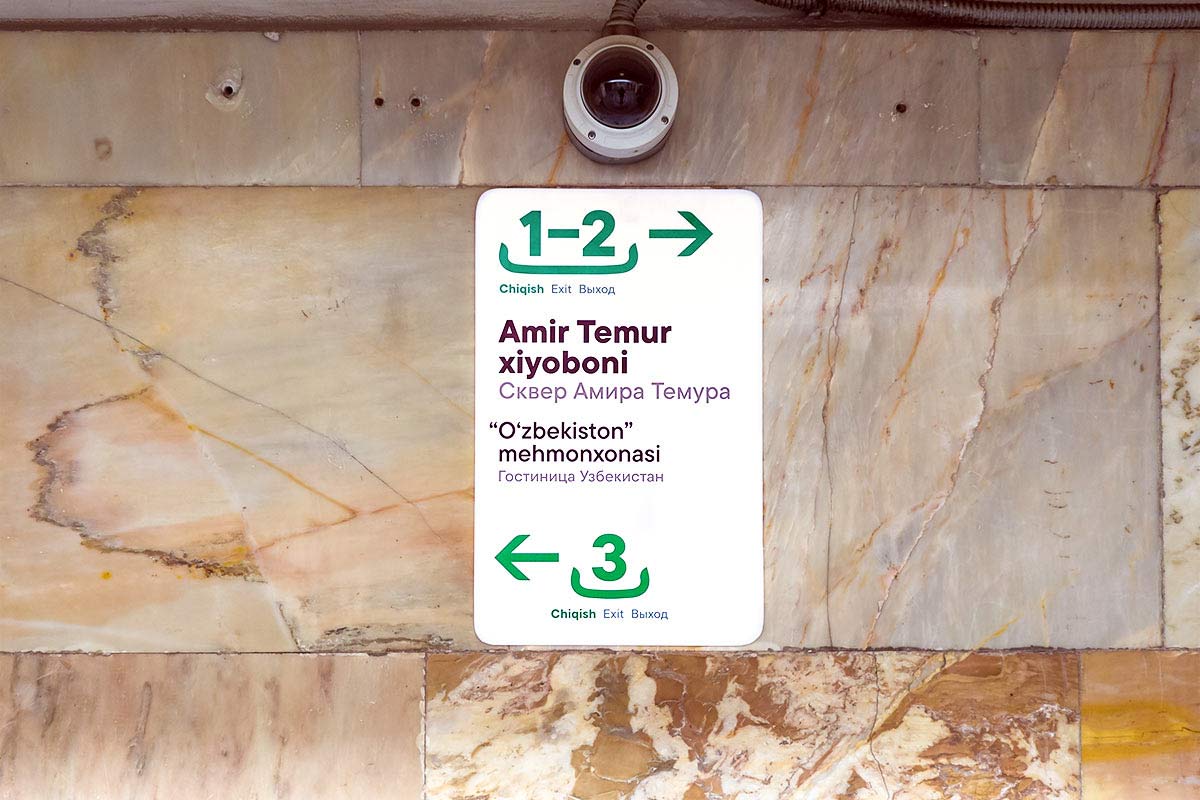
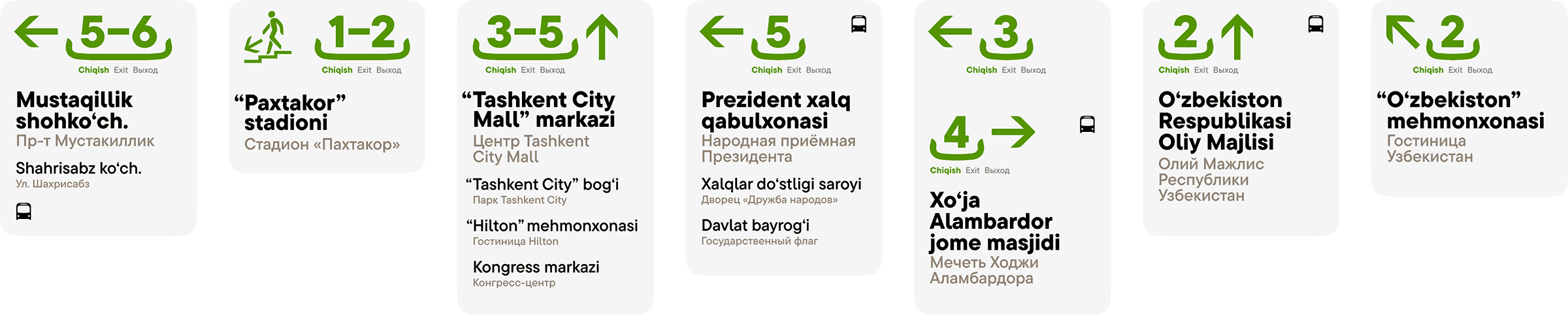
If the path to an exit is not straightforward, additional signs lead the way.
Technology
One of the lead designer’s tasks on a project this large is setting up efficient workflows.
All signage was designed as part of a single design system built from reusable components. The time needed to prepare layouts for the next station was reduced to a minimum, and most of the work went into information planning: deciding which destinations we guide people to, and exactly how.
But how do you make sure that the signs along a person’s route don’t contradict each other? And if the client asks to change the translation of one destination on a sign, how do you make sure you update it across all signs at once?
At each station, the work began with a draft map of the surrounding area. It was the single source of truth for destination names, priorities, translations, and exit numbering. While the metro was preparing comments and suggestions, the designers drew station plans, placed future signs on the plan, and prepared layouts that didn’t include any surface-level details. After approval, any missing layouts were assembled taking the feedback into account. The very last step was to bring the draft map to a final, polished form.
Let’s make wayfinding together!
Ilya Birman
Art director
and lead designer
Timur Repin
Designer
Eugene Borisenko
Designer
Alibek Musabekov
Designer
Sahib Gulyamov
Project lead
Elizaveta Bogdanova
Project manager
Thanks to TBC, PayMe, and Tashkent Metro who together made it possible.
The font is “ТТ Commons Pro” by TypeType.